Rice Color Sorter: How It Works and Why It Is Important in Modern Rice Milling
As the rice processing industry continues to develop, the quality requirements for finished rice are becoming increasingly strict. In addition to milling and polishing, color sorting has become an important step in modern rice processing.
A Rice Color Sorter, also known as a rice optical sorter, uses advanced optical detection technology to identify and remove discolored, defective, or foreign-colored grains from good-quality rice. It helps improve the appearance, cleanliness, and consistency of finished rice.
How Does a Rice Color Sorter Work?
The working process of a modern rice color sorter can generally be divided into several steps.
1. Feeding
Processed rice enters the color sorter through a feeding system and is evenly distributed into individual sorting channels.
2. High-Speed Imaging
As the rice grains pass through the optical detection area, high-resolution cameras and sensors capture images of the grains.
3. Intelligent Identification
The control system analyzes the color and appearance of each grain and compares the detected characteristics with the preset sorting parameters.
4. Air-Jet Ejection
When a defective grain is detected, the system activates a high-speed air valve to eject the unwanted grain from the normal rice stream.
5. Quality Separation
Good-quality rice continues through the normal outlet, while defective grains are collected separately.
This process is repeated continuously, allowing the color sorter to perform high-speed and automated sorting.
Why Is Color Sorting Important in Rice Processing?
Improving the Appearance of Finished Rice
Consumers usually expect commercial rice to have a clean and uniform appearance. Removing discolored grains can significantly improve the visual quality of the finished product.
Improving Product Consistency
Color sorting helps reduce the amount of defective rice in the final product and provides more consistent quality from batch to batch.
Increasing the Value of Finished Rice
For premium rice products, appearance and uniformity are important factors. Effective color sorting can help rice processors produce higher-grade commercial rice.
Supporting Automated Rice Processing
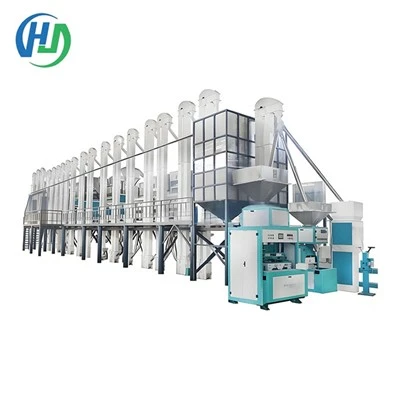
Modern rice milling plants increasingly use automated equipment. A rice color sorter can be integrated with rice milling machines, polishing machines, graders, and packaging systems to form a continuous production line.
Where Is the Rice Color Sorter Installed?
In a typical rice milling process, the color sorter is generally installed after milling, polishing, and grading.
A typical process can be:
Paddy → Cleaning → Destoning → Husking → Paddy Separation → Rice Milling → Rice Polishing → Rice Grading → Color Sorting → Packaging
The exact process may vary according to the rice variety, production capacity, finished product requirements, and plant design.