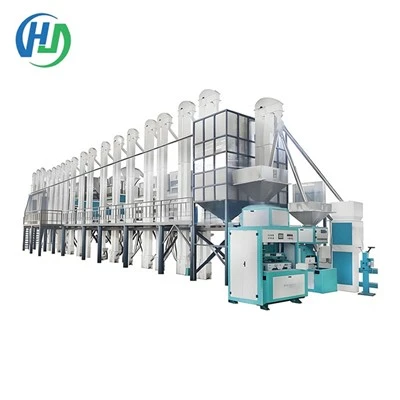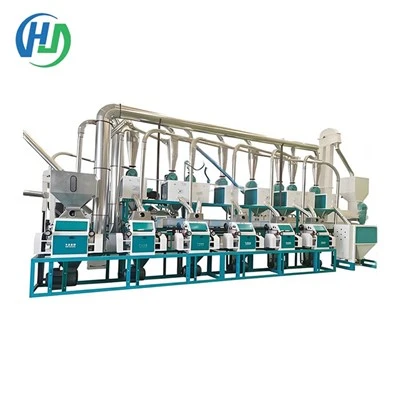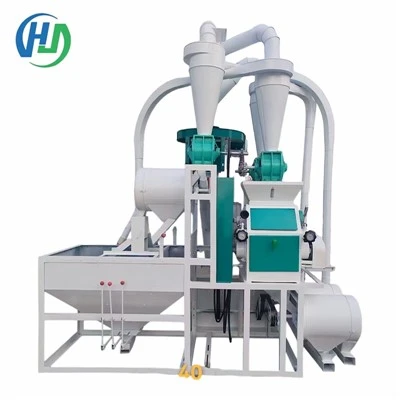
During the operation of a grain processing line, safety and equipment maintenance are paramount priorities. Operators must undergo training to become thoroughly familiar with the operating procedures and emergency shutdown protocols for the equipment at every stage, thereby preventing equipment damage or personal injury caused by improper operation. Concurrently, the processing line's electrical systems, transmission components, and scraping mechanisms should be inspected regularly to ensure that motors, speed reducers, belts, and chains are functioning correctly, thereby preventing malfunctions caused by wear or looseness. Furthermore, prior to operation, the cleaning ports, screens, and grinding discs must be checked to ensure they are unobstructed, preventing blockages caused by debris that could lead to reduced output or mechanical damage.
Raw material management and production process control are equally critical. The grain fed into the processing line must meet established standards regarding moisture content, impurity levels, and breakage rates to ensure optimal hulling and milling results. During processing, parameters such as feed rate, grinding gap width, and screen mesh size must be adjusted according to the specific grain variety being processed to ensure uniform product particle size and a low breakage rate. Additionally, attention must be paid to dust removal and ventilation to prevent dust accumulation, which could pose a fire hazard or compromise environmental hygiene. Following operation, the production line requires cleaning, lubrication, and routine maintenance to extend the equipment's service life; detailed operational records should also be maintained to facilitate the analysis of production efficiency and quality issues, thereby ensuring the long-term, efficient, and stable operation of the grain processing line.