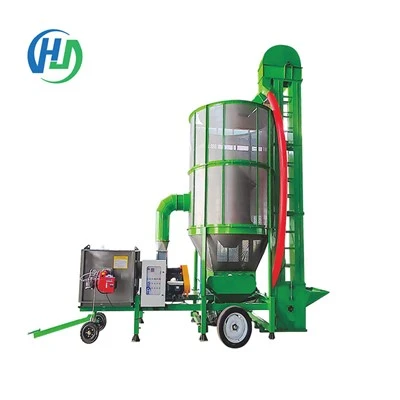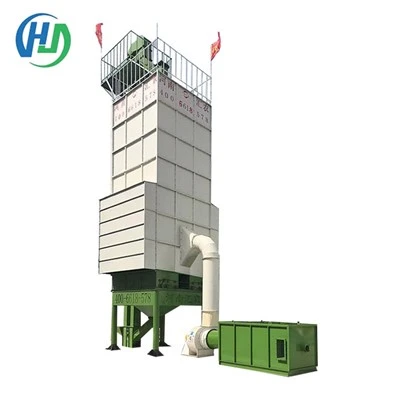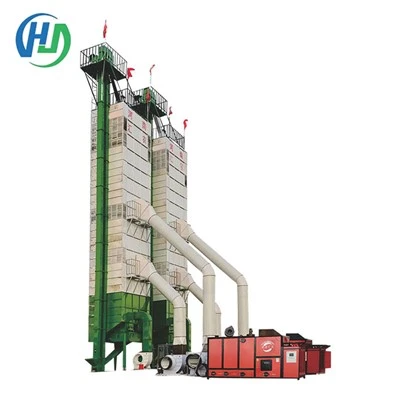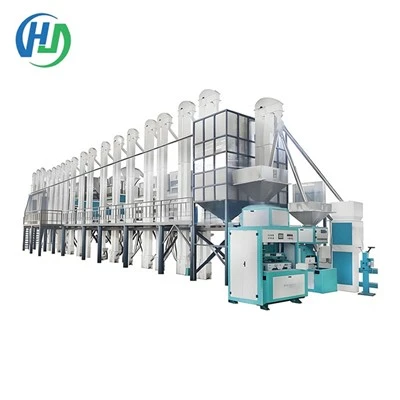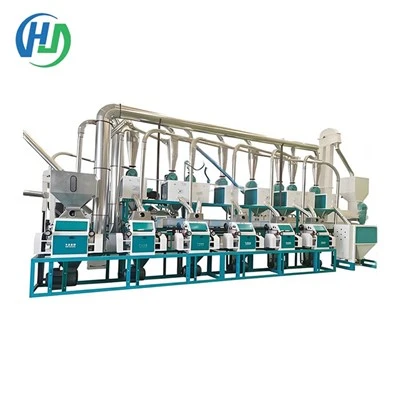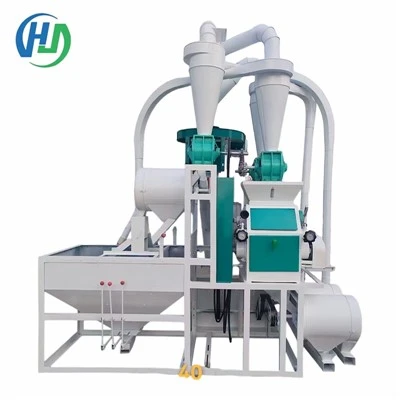
The auxiliary equipment for grain dryers can be broadly categorized into three main areas: material conveying, cleaning and screening, and heating and energy supply. Material conveying equipment is used to transport grain from warehouses or silos to the dryer's inlet, and subsequently to move the dried grain to storage or packaging stages; common examples include screw conveyors, bucket elevators, and belt conveyors. Different types of conveying equipment are selected based on the specific grain variety, conveying distance, and throughput requirements, ensuring a continuous and uniform flow while minimizing grain breakage. Cleaning and screening equipment is primarily utilized to remove impurities-such as stones and dust-from the grain, thereby enhancing drying efficiency and product quality. This category includes vibrating screens, air classifiers, and magnetic separators; these devices can be deployed both before and after the drying process, serving to protect the drying machinery while simultaneously ensuring grain hygiene.
Another critical category of auxiliary equipment comprises heat sources and dust removal systems. Heat source equipment supplies a steady stream of hot air to the dryer; typical examples include coal-fired boilers, gas furnaces, electric heating units, and biomass hot-air furnaces. The choice of heat source is determined by factors such as energy costs, environmental regulations, and production capacity. Dust removal equipment constitutes a vital component for ensuring both operational safety and environmental protection. Commonly used devices-such as bag filters, cyclone separators, and negative-pressure fans-effectively capture dust generated during the drying process, thereby preventing dust accumulation that could lead to equipment malfunctions or safety hazards. Furthermore, some drying systems are equipped with temperature and humidity control units as well as air circulation systems to enhance drying uniformity and improve energy efficiency.