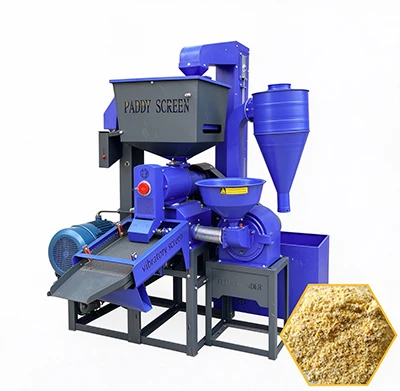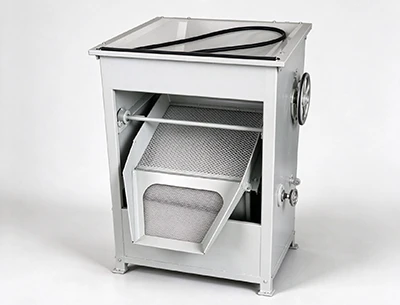
Flour milling machines are core special equipment in the grain and oil processing industry. Through physical milling, extrusion, shearing, sieving and other processes, they break down the grain structure of wheat, corn, coarse cereals and other grains, separate bran, germ and endosperm, and produce edible flour with different fineness and grades. Widely used in home processing, small workshops, grain & oil processing plants and large food industrial production lines, they are indispensable key equipment in the deep grain processing industrial chain. With the upgrading of food industry and standardization of grain and oil processing, the flour milling machine industry is gradually developing towards automation, high precision, energy saving, low carbon and multi-functional integration.
1. Core Classification and Application Scenarios of Equipment
Mainstream flour milling machines in the industry are classified by working principle, equipment scale and application scenarios. Models vary greatly in performance, capacity and flour quality to meet diverse market demands.
1.1 Classification by Working Principle (Mainstream Core Models)
Roller Mill (High-end mainstream model for the industry) As the core equipment of large and medium-sized flour mills, it enjoys prominent market premium, 40%-60% higher than ordinary models. It consists of two pairs of metal rolls rotating in opposite directions at different speeds. Grains are crushed by extrusion and shearing between rolls. The roll gap can be precisely adjusted to control flour particle fineness. The equipment adopts multi-stage milling processes including crushing, grading, scraping and purification, which can efficiently separate bran from endosperm. The finished flour features uniform color, few impurities and high precision, with a flour extraction rate of 72%-75%, greatly reducing grain loss. This model has a wide capacity range and supports continuous production of 1-100 tons per hour. With strong stability and low failure rate, it is the preferred equipment for industrial flour processing.
Hammer Mill (Economical general-purpose model) It crushes grains by high-speed rotating hammers. Featuring simple structure, low cost and easy maintenance, it occupies about 24.7% of the market share. Its disadvantage lies in low milling precision. It cannot realize fine separation of bran and endosperm, resulting in poor flour uniformity, rough texture and high impurity content. It is mainly suitable for small workshops, rural individual processing, as well as low-precision processing of coarse cereal powder and feed powder, and is not applicable for high-end refined flour production.
Pin Mill (Multi-functional segmented model) It is refined auxiliary milling equipment that impacts and crushes materials through high-speed rotating pin teeth, with both milling and dispersing functions and strong versatility. It can process wheat, millet, coarse cereals and other grains, mostly used for secondary flour refining and ultra-fine powder production. It is often combined with roller mills to form complete production lines to make up for the processing shortcomings of single equipment.
1.2 Classification by Application Scale
Small household milling machine: Compact size, simple operation and high intelligence. Featured with miniaturization and portability, it is suitable for fresh home-milled flour and baby food coarse cereal powder processing. It has low capacity, small single processing volume and single function.
Medium and small commercial milling machine: Integrated with milling and simple sieving functions, with moderate automation degree and continuous operation capability. Suitable for township processing plants and small grain & oil workshops, it has a daily output from several tons to dozens of tons, balancing cost performance and processing quality.
Large industrial complete milling production line: Equipped with automatic control system, pneumatic conveying system and intelligent sieving & dust removal system, it realizes full-process automation of feeding, milling, sieving and packaging. The daily output can reach hundreds of tons for large-scale and standardized production of major grain & oil enterprises.
2. Core Working Principle and Production Technology
Modern flour milling is not a single crushing process, but a refined separation process coordinated by multiple working procedures. Its core logic is "gradual milling, classified purification, bran and germ separation". The complete process includes four core stages:
Pre-treatment: Clean raw grains to remove impurities, wash and temper wheat, get rid of stones, dust and moldy grains. Meanwhile, adjust grain moisture to soften kernel structure, reduce the probability of bran breakage and lay a foundation for refined milling.
Crushing: Break complete grain kernels through primary grinding rolls, peel off surface bran, and initially separate large endosperm particles to prevent fine bran from mixing into flour and affecting quality.
Fine milling: Multi-stage grinding rolls are used for gradient processing. Combined rolls with different gaps and rotating speeds repeatedly shear and extrude endosperm for refinement until flour meets fineness standards, while continuously stripping residual bran and germ.
Sieving and purification: Equipped with high-precision screens and air-separation dust removal equipment, flour, bran and germ are classified and screened to separate high-gluten, medium-gluten and low-gluten flour of different grades. Dust and impurities are removed before finished product collection and packaging.
3. Industry Market Pattern and Core Competitive Factors
3.1 Characteristics of Market Pattern
The global flour milling machine market presents a pattern of "monopoly in high-end segment and fragmentation in mid & low-end segments". The high-end complete industrial equipment market is dominated by international leading brands. Relying on core roller technology, automatic control system and complete process advantages, they hold the core share of high-end flour mills. Domestic manufacturers focus on mid-low-end commercial, household markets and small & medium-sized complete production lines. They rapidly seize the market with cost performance, local after-sales service and customized solutions, and are gradually breaking technical barriers for high-end equipment.
From the demand side, the industrial upgrading of grain & oil, the rise of small rural processing industries and the popularization of deep processing of coarse cereals continuously drive equipment demand. Automated, high flour-extraction and energy-saving equipment become core market requirements.
3.2 Core Competitive Indicators
Flour extraction rate: Core profit indicator. High-quality roller mills maintain a stable flour extraction rate above 72%. Compared with ordinary equipment, it can produce an extra 3-7 jin of flour per 100 jin of wheat, bringing remarkable economic benefits in large-scale production.
Flour precision: Determines flour grade. High-end equipment can accurately control particle uniformity and effectively separate bran and germ, suitable for refined flour and special flour production.
Automation level: Fully automatic production lines support real-time working condition monitoring, automatic roll gap adjustment and intelligent fault early warning, greatly cutting labor costs and improving production stability.
Energy saving and environmental protection: New-type equipment adopts pneumatic conveying and closed milling structure with low dust emission and energy consumption, complying with environmental protection standards for grain and oil processing.
4. Industry Technology Development Trends
Intelligent & automatic upgrading: Traditional manually adjusted equipment is gradually phased out. Intelligent control systems become standard configuration, supporting remote monitoring, one-click parameter adjustment and production data traceability to realize unmanned and standardized production, meeting the intelligent transformation needs of modern grain & oil industry.
High-precision refined processing: With the expansion of the special flour market (bread flour, cake flour, dumpling flour), milling equipment develops towards precise micro-gap regulation and multi-stage fine sieving, which can customize flour fineness and gluten strength according to food applications.
Energy-saving, low-carbon and integrated design: Continuous optimization of equipment structure adopts low-loss roller materials and closed conveying systems to reduce material loss and power consumption. Dust removal and noise reduction devices are equipped to meet environmental production requirements.
Multi-function & universal application: Breaking the limitation of single wheat milling, the equipment supports processing of corn, millet, buckwheat, oats and other coarse cereals, adapting to the development of coarse cereal deep processing industry and improving equipment reusability.
Modular and portable design: Medium and small-sized equipment adopts modular design with easy installation, small footprint and mobility, suitable for mobile rural processing and customized processing in small stores, improving market adaptability.
5. Existing Industry Pain Points and Development Prospects
5.1 Existing Industry Pain Points
Obvious technical gaps: Some high-end core components of domestic equipment (high-precision grinding rolls, intelligent control systems) still partially rely on imports. The competitiveness of high-end complete sets of equipment is insufficient. The mid-low-end market suffers from fierce homogeneous competition and severe price competition.
High operation and maintenance costs: Precision components of industrial milling equipment wear quickly. Maintenance of traditional equipment is complicated. Some small and medium-sized enterprises lack professional operation and maintenance personnel, resulting in high equipment failure rate and shortened service life.
Insufficient standardization: Equipment parameters and process standards of small and medium manufacturers are inconsistent, leading to uneven product quality and hindering the overall standardization upgrading of the flour processing industry.
5.2 Industry Development Prospects
Grain processing is an essential industry for people's livelihood. As the core raw material for staple food, flour enjoys stable and continuously upgraded market demand, driving the long-term steady development of the flour milling machine industry. On one hand, standardized national grain and oil reserve and food industry standardization promote the elimination and renewal of old equipment, leaving broad space for incremental market and stock replacement market. On the other hand, the rise of emerging tracks such as deep processing of coarse cereals, high-end special flour and fresh on-site milled flour forces technical iteration of milling equipment. Multi-functional, intelligent and high-precision equipment will become the mainstream of the industry. In the future, domestic equipment manufacturers will continuously break through core technologies, realize high-end branding and overseas expansion, gradually replace imported equipment, and the whole industry will upgrade toward standardization, high quality and high efficiency.