As global agricultural production and grain distribution continue to develop, efficient grain storage has become an important part of the modern agricultural supply chain.
For farms, grain collection centers, flour mills, rice processing plants, and feed manufacturers, grain storage is no longer just about having enough warehouse space. Businesses are increasingly looking for integrated solutions that connect grain receiving, cleaning, drying, storage, conveying, and distribution.
In this development, Steel Grain Silos are playing an increasingly important role in modern bulk grain storage and handling systems.
Grain Storage Is Evolving Beyond Traditional Warehouses
Traditional grain storage methods often rely on warehouses and relatively simple handling equipment.
Although these facilities can meet basic storage needs, large-scale grain businesses may face challenges involving manual handling, material transportation, storage management, and loading and unloading efficiency.
Steel grain silos provide another approach.
With vertical storage structures and mechanical conveying systems, grain can be transported directly from receiving facilities into designated silos and later transferred to processing equipment or transportation vehicles.
This approach makes it easier to organize bulk grain storage and connect different stages of grain handling.
Modular Steel Silos Offer Flexible Storage Planning
One important advantage of steel grain silos is their flexibility in project planning.
Instead of building one large storage structure, customers can arrange multiple silos according to their required capacity and available installation space.
For example, a grain storage facility may use separate silos for wheat, corn, soybean, and other agricultural products.
This arrangement offers several practical benefits:
• Separate storage for different grain varieties;
• Flexible capacity planning;
• Easier inventory organization;
• Convenient grain loading and unloading;
• Potential for future storage expansion;
• Better integration with grain processing facilities.
The number, size, and arrangement of silos should be determined according to actual storage requirements and engineering conditions.
Automated Grain Conveying Improves Storage Efficiency
In modern grain storage facilities, the conveying system is just as important as the storage structure.
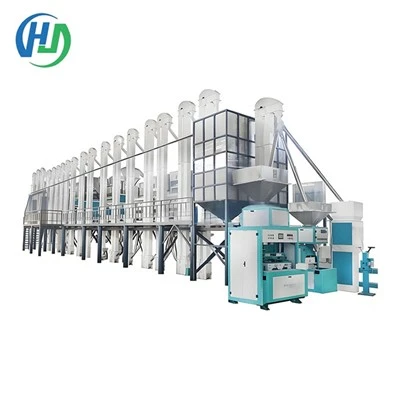
A complete steel silo project may include bucket elevators, belt conveyors, chain conveyors, screw conveyors, distribution equipment, and discharge systems.
These machines work together to transport grain between receiving points, cleaning equipment, dryers, storage silos, and loading areas.
For larger projects, automated routing and control systems can help operators select different grain paths and manage material transfer between multiple silos.
Properly designed conveying equipment can reduce unnecessary manual handling and support more continuous grain movement.
Grain Cleaning and Drying Are Essential Before Storage
Another important development in grain storage projects is the integration of cleaning and drying equipment.
Freshly harvested grain may contain dust, straw, stones, and other impurities. Its moisture content may also be too high for the intended storage period.
Before long-term storage, grain generally needs appropriate cleaning and moisture control.
A typical grain handling process may include:
Grain Receiving → Pre-Cleaning → Drying (When Required) → Final Cleaning → Elevator Conveying → Steel Silo Storage → Discharge and Transportation
The actual process depends on the grain type, incoming moisture content, storage duration, and project requirements.
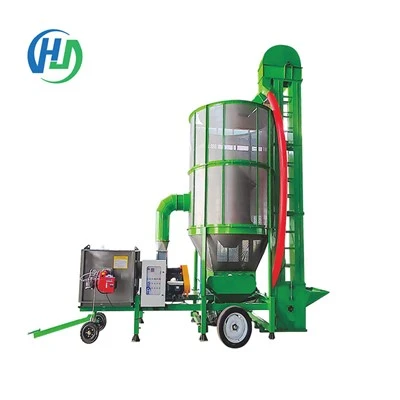
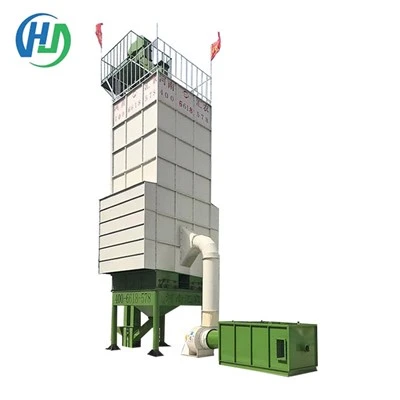
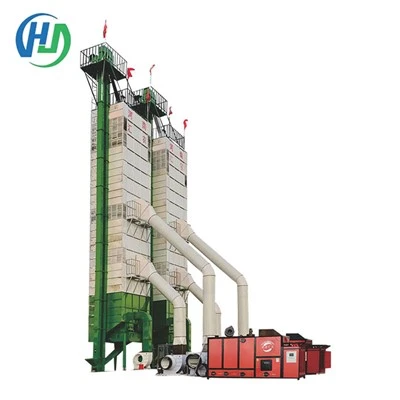
Cleaning helps remove impurities, while a grain dryer reduces excessive moisture when necessary.
After the grain enters the silo, an appropriate aeration and monitoring system helps maintain suitable storage conditions.