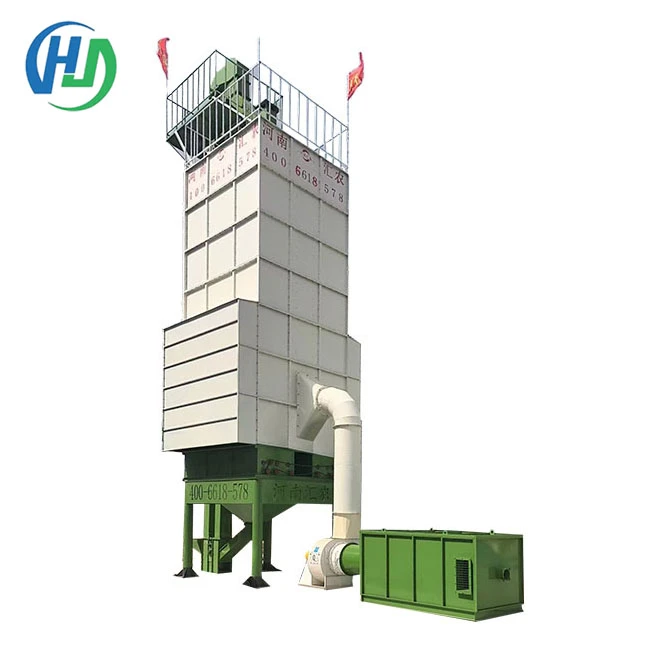
Based on their operating principles and modes of operation, drying machinery can be categorized into various types; the most common among these include convective dryers, conductive dryers, radiative dryers, and vacuum drying equipment. Convective dryers constitute the most widely utilized category of equipment; they primarily remove moisture through the direct contact of hot air with the material being dried-examples of this type include grain dryers and hot-air dryers. These devices feature a relatively simple structure and high processing capacity, making them well-suited for large-scale, continuous production in industries such as grain processing, animal feed manufacturing, and timber processing. Conductive dryers, conversely, rely on heated surfaces to transfer thermal energy directly to the material to facilitate dehydration; common examples include drum dryers and disc dryers. Their primary advantage lies in their high thermal efficiency, making them ideal for drying materials with high moisture content or high viscosity.
Based on their structural configuration, drying machines can be further classified into tower, drum, belt, cabinet, and fluidized-bed types. Tower dryers are predominantly used in the grain industry, characterized by their compact footprint and robust capacity for continuous operation. Drum dryers utilize a rotating cylinder to continuously tumble the material, thereby ensuring more uniform heating; they are suitable for drying granular or lumpy materials. Belt dryers employ a conveyor belt to slowly transport the material; they are frequently used for products-such as fruits, vegetables, and traditional Chinese medicinal herbs-where the preservation of visual quality is paramount. Fluidized-bed dryers utilize a high-velocity airflow to suspend the granular material, thereby enhancing heat exchange efficiency; consequently, they are widely applied in the chemical, pharmaceutical, and food processing sectors. Cabinet dryers feature a simple structure and are well-suited for small-scale production and laboratory applications.