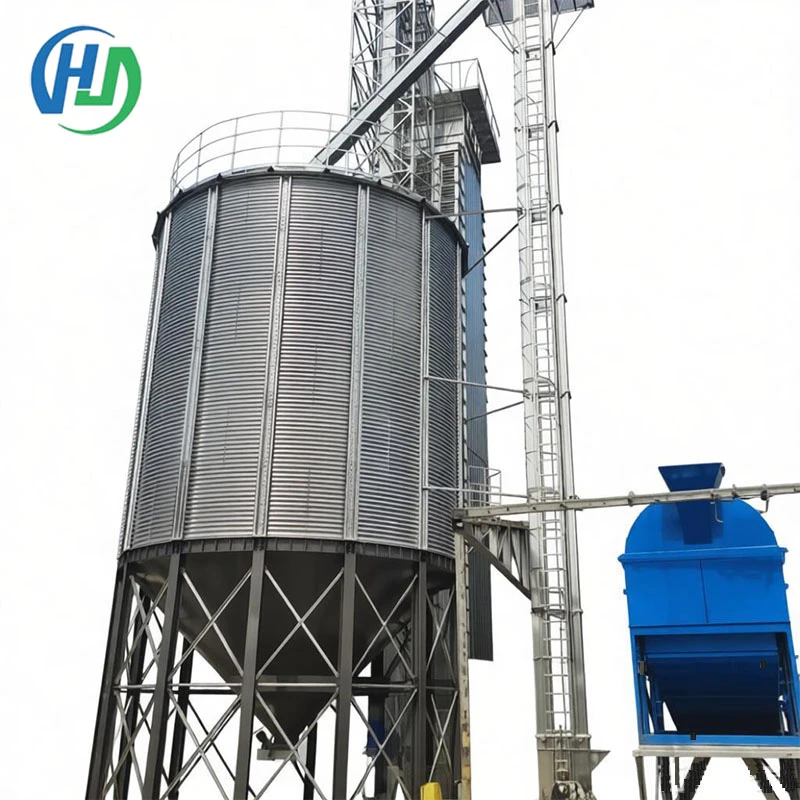
The performance metrics of steel grain silos are primarily reflected in their storage capacity, sealing performance, and structural stability. Storage capacity is one of the key indicators for evaluating a steel silo; depending on their specifications, these silos can hold anywhere from a few hundred to tens of thousands of tons of grain, thereby meeting the large-scale storage requirements of grain depots, feed mills, and grain processing enterprises. The silo body is typically constructed from high-strength galvanized steel plates, offering excellent compressive strength and corrosion resistance; this ensures that the structure remains free from deformation and rust issues during long-term grain storage. Furthermore, steel silos are required to possess superior sealing capabilities to effectively prevent the ingress of external air and moisture, thereby mitigating the risks of dampness, overheating, and mold growth in the grain, while simultaneously enhancing storage safety and preservation efficacy.
In terms of operational performance, ventilation and temperature control capabilities constitute another critical set of metrics for steel grain silos. Modern steel grain silos are typically equipped with mechanical ventilation systems, temperature monitoring systems, and automated control equipment. By continuously monitoring real-time fluctuations in grain temperature and humidity, these systems allow for the timely adjustment of the internal environment, thereby maintaining the grain in a stable storage state. This is particularly vital during hot or humid seasons, when effective ventilation can significantly lower the temperature of the grain mass and curb the proliferation of pests and mold.
Beyond their grain storage capabilities, the safety and service life of steel silos are also pivotal evaluation criteria. High-quality steel silos are designed with comprehensive consideration given to wind resistance, seismic resilience, and snow load capacity, ensuring stable operation even under challenging climatic conditions. The structural joints and connections of the silo body must exhibit robust fastening integrity to prevent loosening or water leakage issues over the course of long-term use. Under standard conditions-and provided they undergo proper installation and maintenance-steel grain silos can typically achieve a service life exceeding twenty years. Concurrently, operational noise levels, energy consumption efficiency, and long-term maintenance costs are increasingly becoming key performance indicators of interest to users.